Appliance Error Codes Explained: What They Mean and What to Do
Your appliance is displaying an error code. Learn how to interpret common codes and whether you can fix it yourself or need professional help.
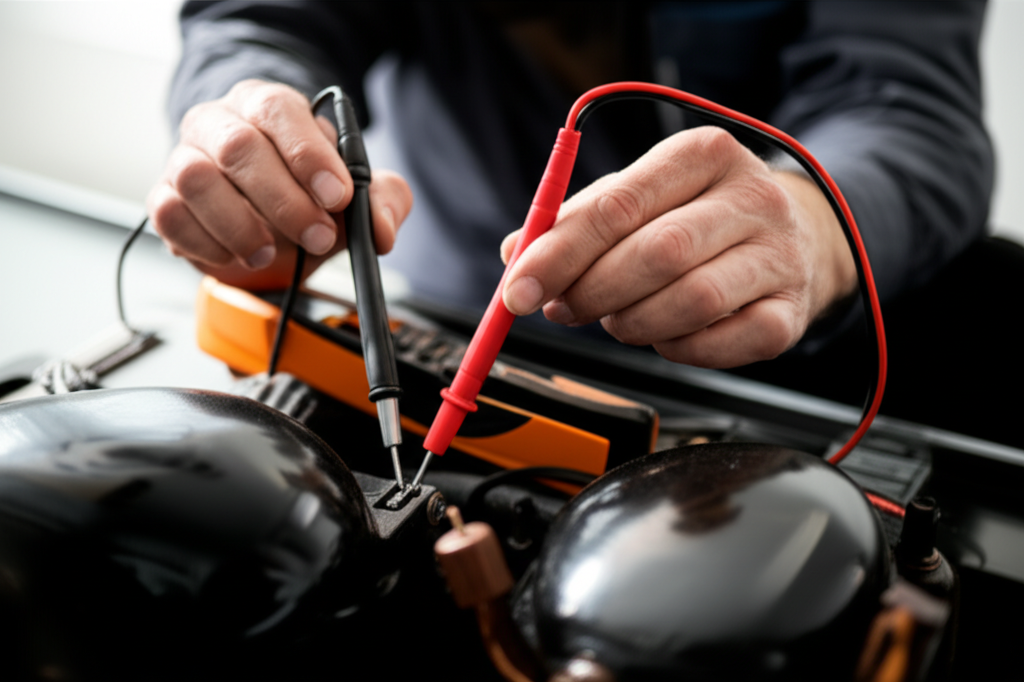
Modern appliances communicate problems through error codes displayed on control panels. Understanding what these codes mean helps you respond appropriately—whether that's a simple reset or calling for professional service.
How Error Codes Work
### Purpose of Error Codes
Error codes serve two functions: 1. Alert you that something needs attention 2. Give technicians a starting point for diagnosis
### Code Formats
Different manufacturers use different formats: - **Number codes**: E1, E2, E3 or F1, F2, F3 - **Letter-number combinations**: EC, EO, CF - **Descriptive text**: "Check filter," "Door open" - **Flashing lights**: Patterns indicate specific issues
### Finding Your Codes
On the appliance: Look for a display panel showing alphanumeric codes **In the manual**: Owners manuals list codes and basic meanings **Online**: Search "[Brand] [Model] error code [code number]" **On the unit**: Some appliances have a code chart on the unit itself
Common Refrigerator Error Codes
### Sub-Zero Codes
EC (Evaporator Communication): Communication error between control boards. Try power cycling (turn off 30 seconds, then back on). If code returns, professional service needed.
EO (Evaporator Thermistor): Temperature sensor issue in evaporator. Unit may not cool properly. Requires professional diagnosis.
CO (Condenser): Condenser-related issue. Check that condenser coils are clean and air can circulate. If clean, professional service needed.
CF (Condenser Fan): Condenser fan issue. Fan may be blocked, failing, or wiring problem. Check for debris; if clear, call for service.
### General Refrigerator Codes
High temp alarm: Interior too warm. Check door seal, verify door closes fully, clean condenser coils. If problem persists, professional diagnosis needed.
Door ajar: Door not fully closed or sensor malfunction. Verify door is closed. Check for obstructions. If door is closed and code persists, sensor issue.
Filter: Time to replace water filter. Not an error—a maintenance reminder.
Common Range and Oven Error Codes
### Wolf Codes
Oven won't heat with no code: Often a failed igniter (gas) or element (electric). Not all failures produce codes.
Temperature sensor codes: Various codes indicate temperature sensor problems. Oven may not reach or maintain temperature. Professional service needed.
### General Range Codes
F1, F10: Control board issues. Try power cycling. If code returns, control board may need replacement.
F2, F20: Oven over-temperature. Oven got too hot. May indicate faulty sensor or control. Don't use until diagnosed.
F3, F30: Oven sensor open circuit. Temperature sensor failure. Requires professional replacement.
F5: Oven door latch issue (self-cleaning ovens). Door won't lock or unlock. May be mechanical or switch issue.
F9: Oven door lock issue. Similar to F5. Don't force the door.
LOC/LOCK: Control lock is engaged. Not an error. Consult manual to unlock controls.
Common Dishwasher Error Codes
### Cove Dishwasher
Cove dishwashers display specific error messages rather than codes: - **"Check water supply"**: Verify water is on, inlet valve may be blocked or failed - **"Check drain"**: Drain is clogged or drain pump issue
### Bosch/Miele Common Codes
E15: Water in base (leak detected). Check for visible leaks. Unit has safety shutoff. Professional service to diagnose source.
E22/E24: Drain issues. Filter may be clogged, drain hose kinked, or pump problem. Clean filter and check drain hose first.
E01/E02: Heating issues. Water isn't reaching proper temperature. May be element, sensor, or control issue.
### General Dishwasher Codes
HE/H20: Water heating issue. Could be element, sensor, or control board. **OE/OF**: Overflow detected. Check for suds (wrong detergent) or inlet valve issue. **LE**: Motor or pump issue. Professional service needed.
Common Washer/Dryer Error Codes
### Washer Codes
UE/UB: Unbalanced load. Redistribute clothes and restart. If persistent, drum or suspension issue.
DE: Door error. Door not closed properly or latch malfunction.
OE: Drain error. Drain clogged, pump failing, or drain hose kinked.
FE: Water fill issue. Water supply off, inlet screens clogged, or valve problem.
### Dryer Codes
AF: Restricted airflow. Clean lint filter and vent. Can be fire hazard if ignored.
DE: Door not closed. Verify door is fully latched.
HE: Heating issue. Element, igniter, or sensor problem depending on gas vs. electric.
What To Do When You See a Code
### Step 1: Record the Code
Write down the exact code before doing anything else. Codes can disappear after power cycling.
### Step 2: Try Power Cycling
Turn the appliance off (at the breaker for hardwired units), wait 30 seconds to 1 minute, then restore power. This clears many temporary errors.
### Step 3: Check the Obvious
- Doors fully closed?
- Water supply on?
- Filters clean?
- Vents clear?
- Any obvious obstructions?
### Step 4: Consult Documentation
Check your owner's manual for code-specific guidance. Many codes have simple resolutions.
### Step 5: Search Online
"[Brand] [Model] error code [code]" often yields helpful information, including whether others had simple solutions.
### Step 6: Call for Service If Needed
Call a technician if: - Code returns after power cycling - Code indicates safety issue (overheat, gas, leak) - You can't identify a simple cause - The appliance won't operate normally
Communicating with Service Technicians
When calling for service, provide:
- **Exact error code(s)** displayed
- **When the code appeared** (during what operation)
- **What you've already tried**
- **Any patterns** (intermittent vs. constant)
- **Appliance model number** (on data plate inside unit)
This information helps technicians prepare for the service call and potentially bring necessary parts.
Error Code Prevention
While you can't prevent all errors, good maintenance reduces code occurrences:
- Clean filters and vents regularly
- Don't overload appliances
- Use proper detergents and supplies
- Address small problems before they escalate
- Schedule periodic professional maintenance
Most error codes indicate something needs attention—either a simple fix you can do or a component that needs professional service. Understanding what codes mean helps you respond appropriately and get your appliance back to normal operation quickly.
Need Professional Appliance Repair?
Our experienced technicians are ready to help with your Sub-Zero, Wolf, and other luxury appliance needs.
Related Articles
Sub-Zero Refrigerator Not Cooling? Complete Diagnosis Guide
Your Sub-Zero stopped cooling? Before calling for service, learn what might be causing the problem and what you can check yourself.
Wolf Range Igniter Keeps Clicking But Won't Light: Causes and Solutions
That constant clicking sound from your Wolf range is frustrating. Learn why it happens and when you can fix it yourself versus calling a technician.